

Radiation harm isn’t gender-neutral.
And no one is talking about it.
Let’s explore…together.
The ATOMS & EVE project is a new science-driven, educational resource that explores how radiation harms female bodies more than male bodies, children more than adults, and pregnancy most of all.
“We are constantly being told about ‘a permissible amount of radiation.’ Who permitted it? Who has any right to permit it?”
– Dr. Albert Schweitzer
Biology matters.
Science confirms that female bodies suffer more harm from ionizing radiation than male bodies.
We must move beyond seeing biological sex as a "confounding factor" and instead treat it as a primary health indicator.
This is not abstract math. It is physical, measurable, and permanent damage to our DNA.
A Failure of Policy.
It is time to stop ignoring the evidence.
Radiation policy is informed by the "average" worker. Women and girls face unique disproportionate dangers that are invisible to decision makers.
Our opportunity:
A path to better protection.
We have the scientific data to make radiation standards more protective right now. By centering policy on the documented biological impacts—the damage to chromosomes, cells, and organs—we can create a safer future for ourselves and our children.
This is a chance to move from outdated assumptions to evidence-based health protection… to safeguard the next generation by demanding better radiation standards.
HER BODY IS YOUR BODY
⚛︎
HER STORY IS YOURS
⚛︎
HER BODY IS YOUR BODY ⚛︎ HER STORY IS YOURS ⚛︎
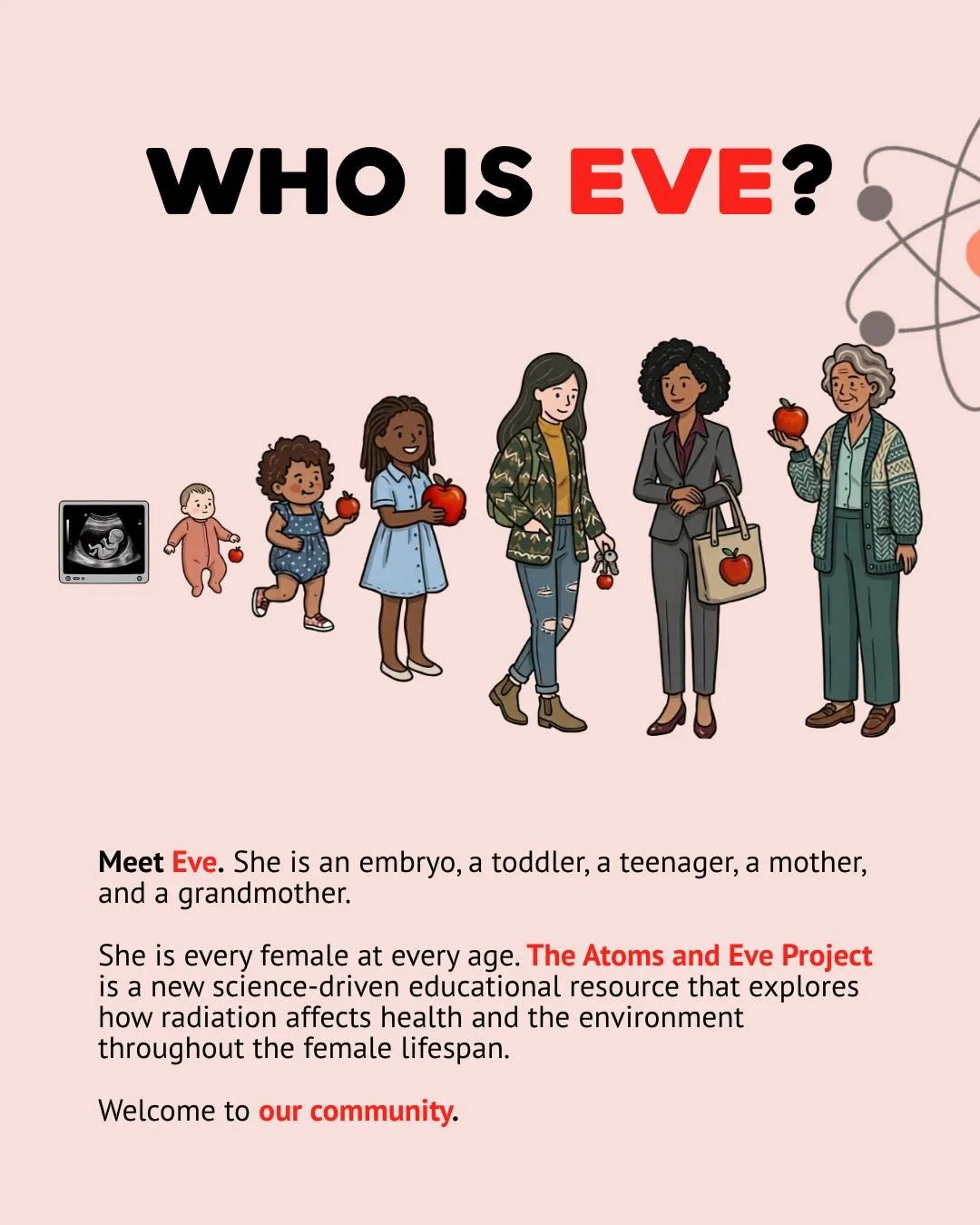
Meet Eve.
She is an embryo, a toddler, a teenager, a mother and a grandmother.
She is every female throughout the female lifespan.
Why Eve, why now?
The ATOMS & EVE project is a new science-driven educational resource that explores how radiation harms female bodies more than male bodies and children more than adults, and pregnancy most of all.
Eve is our vehicle for sharing what we know with you and your communities!
Eve knows:
There is no safe level of exposure
Pregnancy is uniquely vulnerable to radiation damage
Everyone is already being exposed to a legacy of radioactive pollution left by our uses of nuclear technologies


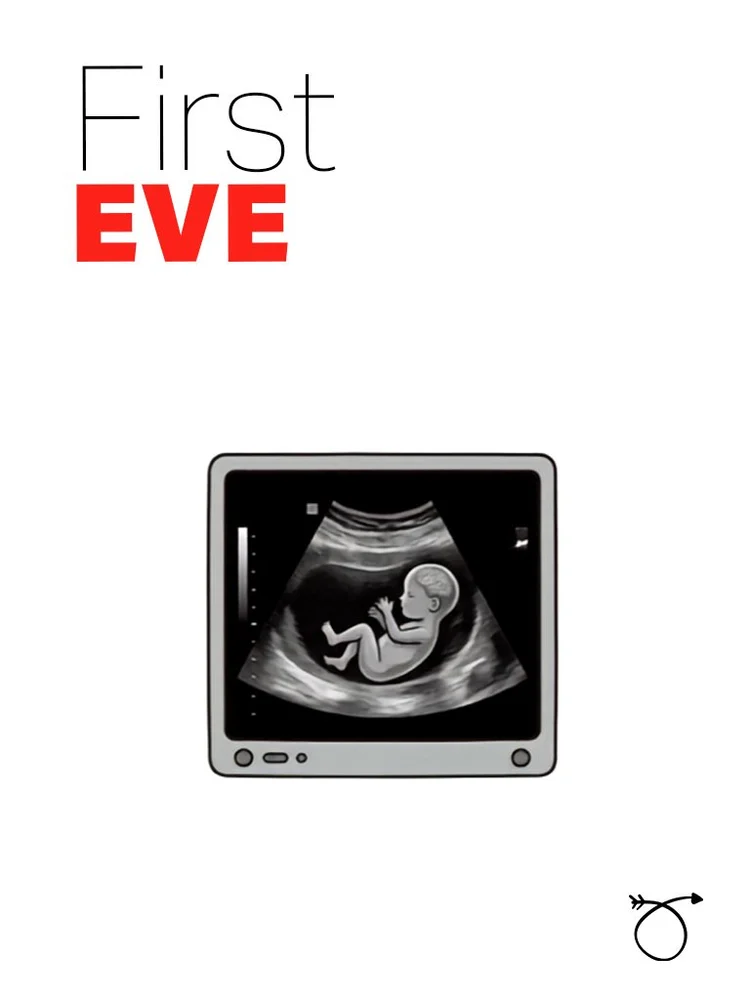
Decades ago, research indicated that increased risk of childhood cancer death is associated with a single fetal X-ray. [1] Now, X-rays during pregnancy are only given if absolutely necessary.
It is no surprise that childhood leukemia increases within about three miles of nuclear reactors. Researchers theorize that exposure to radioactive pollution during pregnancy results in cancer during childhood. [2] [3]

Radiation is harmful to anyone. Biological sex and age contribute to harm from exposure. Radiation regulations use a model called Reference Man. [1]
When young girls are exposed to radiation, they suffer seven times more cancer than the Reference Man model predicts. Women suffer radiation harm more than men; girls are disproportionately harmed compared to boys, and all adults. [2]

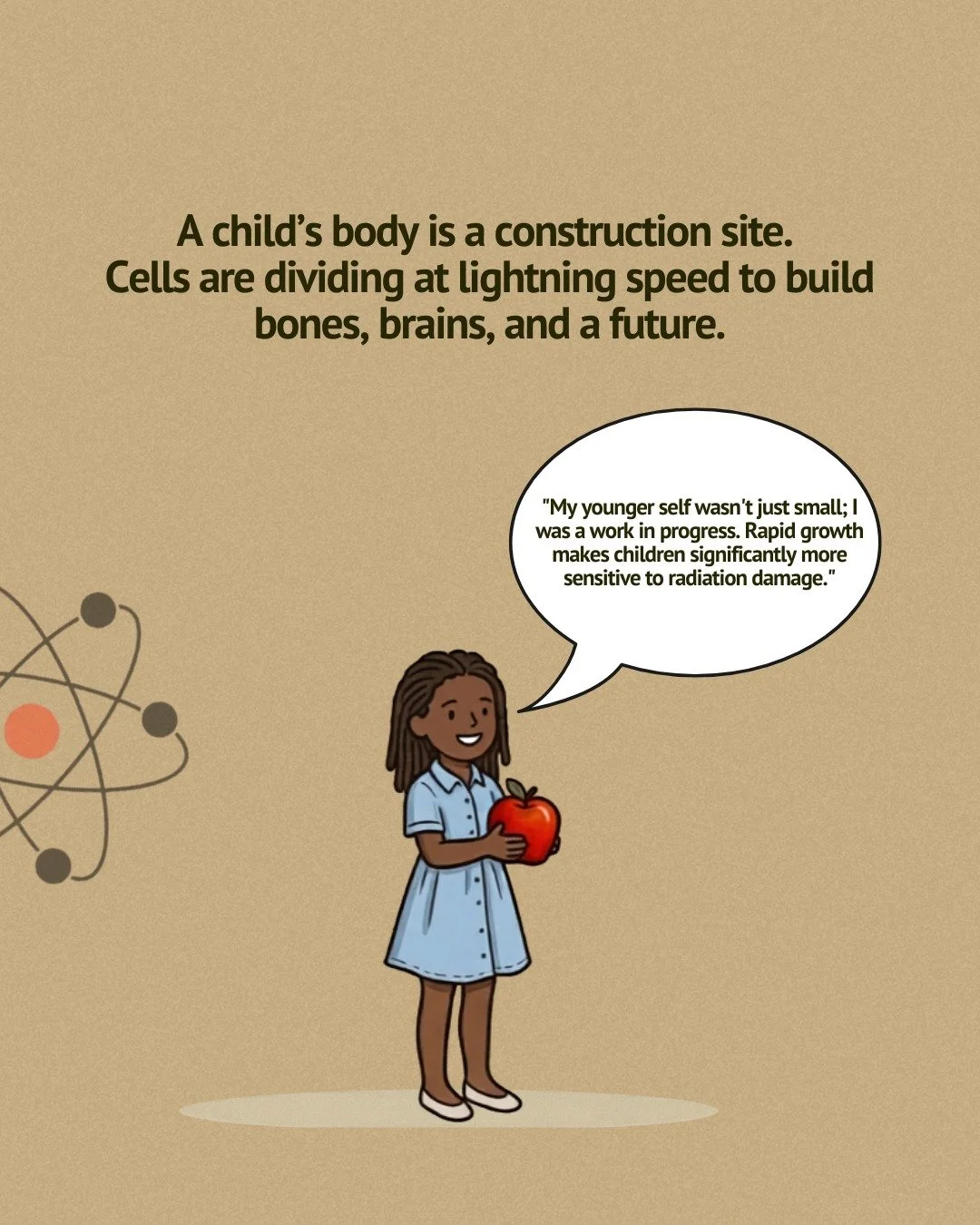
Children are more impacted by radiation than adults—this is in part because they are growing, and their cells are dividing more rapidly.
Radiation is part of industrial society. Nuclear power releases radioactive pollution to air, water, and makes radioactive waste. Fallout from past above-ground nuclear weapons tests is still in our environment and our bodies. [1]
There is no safe exposure to ionizing radiation. [1] In general, the more radiation, the higher the risk of developing disease. Preventing exposures in childhood can increase our lifelong health, and the health of our children.
X-ray and CT images, and some medical procedures, are sources of radiation exposure. It is cumulative and results in cumulative impacts in our bodies. [2]
In general, women have more fat than men. Some radioactive elements regularly released by nuclear power, like Xenon, collect in fatty tissue [1].
After the Three Mile Island (TMI) meltdown, release of radiation, and a week-long venting of radioactive pollution, breast cancer risk increased in the local population [2] as did lung cancer and leukemia [3].
Radioactive pollution contaminates our air, land, crops, livestock, and water resulting in internal radiation exposure due to breathing in or eating radioactive pollution.
A fetus collects some radionuclides at greater concentrations than the mother [1] endangering the health of the pregnancy and raising the risk of cancer in childhood or later in life.
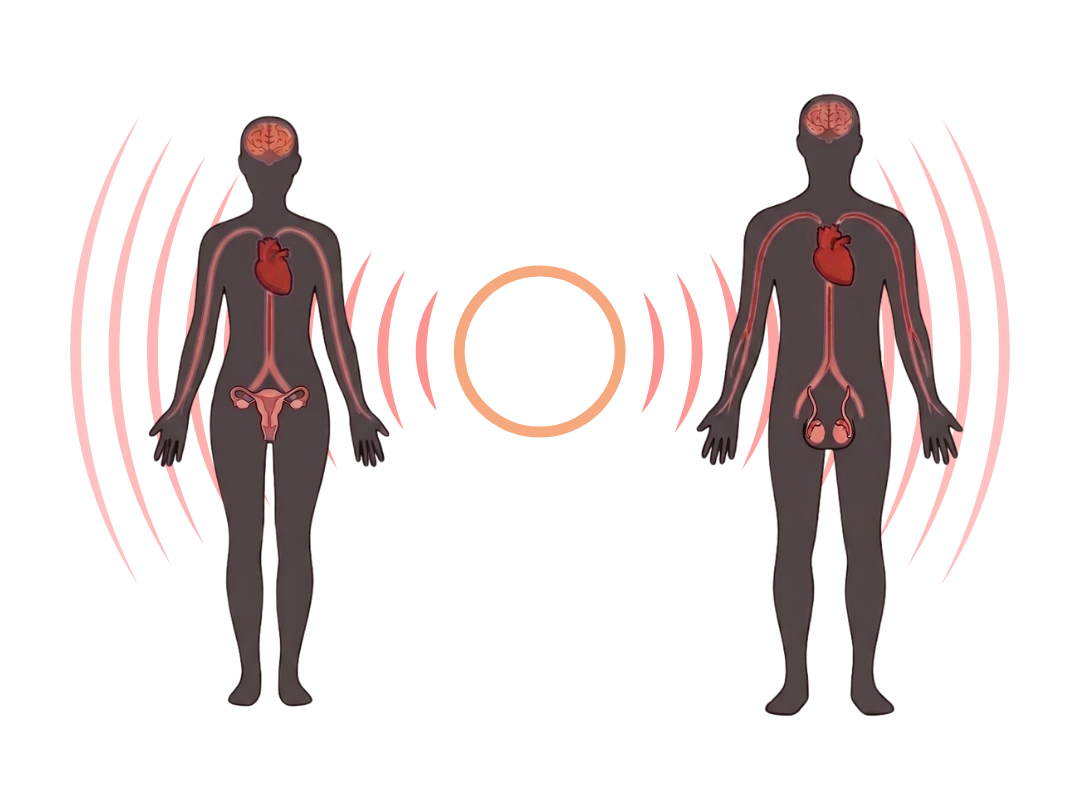
Radiation exposure can cause diseases other than cancer. Chronic Fatigue and Fibromyalgia, diseases that normally appear more in women than men, are associated with even low levels of radiation exposures. [1] [2] [3]
Radiation exposure is also associated with increased risk of cardiovascular diseases, including heart attack and stroke, and when radiation is the cause, women suffer more than men. [4]

Radioactive Radon gas when inhaled, travels to the brain. Radon decay products can cause Alzheimer’s, Parkinson’s and maybe multiple sclerosis. [1]
Elders, as a group, are most likely to suffer cancer. Many things cause cancer, including radiation, where the exposure could be decades earlier. We can’t prove radiation caused a particular disease, nonetheless, no one can prove the opposite.
FACTS
Exposure to ionizing radiation can cause or contribute to:
Infertility
Endocrine (hormones) disruption
Disruption of pregnancy including spontaneous abortion and miscarriage
Stress of the immune system
Cancer and Leukemia—both adult and childhood
Cardiovascular diseases including heart attack and stroke
DID YOU KNOW?
"Little girls exposed between birth and 5 years old were twice as likely to get cancer at some point in the next 60 years than were boys." —Amanda Nichols
A landmark 2025 report released by Norwegian People’s Aid warns that past atmospheric nuclear tests are on course to cause at least two million additional cancer deaths worldwide — a stark reminder that the consequences of nuclear testing are far from historical. [1]
Radiation’s disproportionate impacts should now be the research and policy focus, as society is poised to make crucial and long-lasting decisions regarding climate change mitigation and future energy sources. [2]


Want to learn more?
If you're interested in learning more, sign up for our monthly ATOMS & EVE newsletter.